Schicksalsschläge

In the organizer's words:
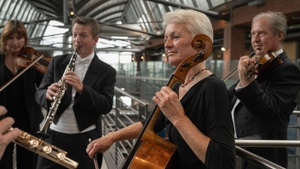
Gustav Mahler and his work play an important role in the great tradition of the Gürzenich Orchestra. He himself conducted the orchestra several times, and two of his symphonies were premiered by the Gürzenich Orchestra. Since then, he has been a mainstay of the orchestra's repertoire, whose unmistakable sound has had a decisive influence on Mahler's compositions - much like the symphonies of Johannes Brahms.
Fate knocks at the door. Not quietly, but with the brutal sounds of a wooden hammer, which makes its grand entrance in the final movement of Mahler's 6th Symphony. Is this powerful work a vision? Does the composer foresee the approaching tragedies of his own life, the death of his daughter, the diagnosis of a serious illness, the forced downturn in his career? Perhaps even the horrors of the First World War? "No work has flowed so directly from his heart. The Sixth is his most personal work and a prophetic one at that," says Alma Mahler, the artist's wife of two years. The symphony is monumental in every respect: a good 80 minutes of playing time, a huge orchestra, a range of emotions from almost orgiastic jubilation to abysmal depression, ethereal and out of this world, then again of noisy brutality. Mahler, more versatile than in perhaps any of his other works, enigmatic and full of surprises like life itself.
Program
Gustav Mahler
Symphony No. 6 in A minor "Tragic"
1903-04
Cast
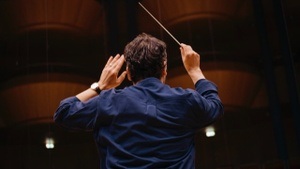
Andrés Orozco-Estrada Conductor
This content has been machine translated.Price information:
Tickets for young adults for €8 Prices €60/48/38/26/20/12
Location





















Events near you
Activities near you
Popular event locations
The best event recommendations for the Rausgegangen App!

Gemeinsam Events erleben
Events werden noch schöner wenn wir sie teilen! Deshalb kannst du dich jetzt mit Friends und anderen Usern vernetzen um Events gemeinsam zu besuchen. Loslegen