Avantgarde. Max Liebermann und der Impressionismus in Deutschland

In the organizer's words:
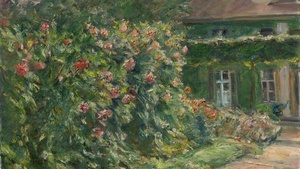
Max Liebermann was the pioneer of the first artistic avant-garde in Germany. With his early and pioneering view of France, he initiated a renewal of painting that had a lasting influence on German Impressionism. Avant-garde. Max Liebermann and Impressionism in Germany, from February 28 to June 7, 2026, will impressively show the development of Impressionism in Germany in all its breadth with over 110 works from more than 60 international collections.
The focus is on Liebermann in his roles as an artist, collector and president of the Berlin Secession, who provided decisive impetus for the internationalization of the German art scene. At the same time, the exhibition reveals how a new generation of painters - inspired by French modernism - artistically developed themes such as vibrant cityscapes, depictions of leisure and nature, portraits of children and theater scenes. In addition to key works by Max Liebermann, Lovis Corinth, Max Slevogt and Fritz von Uhde, works by other important and newly discovered artists will also be on display, including Philipp Franck, Dora Hitz, Gotthardt Kuehl, Sabine Lepsius, Maria Slavona and Lesser Ury.
The loans come from important German and international collections, including the Alte Nationalgalerie Berlin, the Albertinum, Staatliche Kunstsammlungen Dresden, the Folkwang Museum Essen, the Städel Museum Frankfurt, the Neue Pinakothek Munich, the Museo Nacional Thyssen-Bornemisza Madrid, the Musée d'Orsay Paris and the Belvedere Vienna. With works by over twenty artists, the exhibition shows the diversity of German Impressionism and spans a chronological arc from the 1880s to the 1930s. It sheds light on the impulses emanating from France and their resonance before and after the First World War.
A particular focus is on the long-neglected contribution of female artists to the development of German Impressionism. On display are works by Charlotte Berend-Corinth, Emilie von Hallavanya, Dora Hitz, Sabine Lepsius and Maria Slavona. They already asserted themselves artistically in the conservative German Empire and today enable a broader understanding of the movement. Another new aspect is a look at the inspiration that German artists received in France and how they translated these impulses into their painting.
This content has been machine translated.Price information:
Mon, Wed-Fri € 16 / € 10, Sat/Sun/Public holidays € 18 / € 10, Free admission for under 18s and schoolchildren, free admission every Thursday from 2 pm for all under 25s
Location
Organizer
Organizer
You might enjoy this as well?






Events near you
Activities near you
Popular event locations
The best event recommendations for the Rausgegangen App!

Gemeinsam Events erleben
Events werden noch schöner wenn wir sie teilen! Deshalb kannst du dich jetzt mit Friends und anderen Usern vernetzen um Events gemeinsam zu besuchen. Loslegen