Edith Tudor-Hart. Crossing Lines

In the organizer's words:
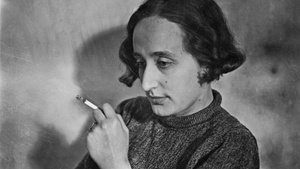
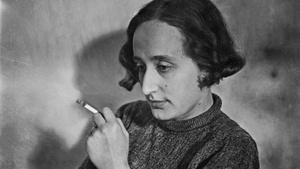
For the first time in Germany, f³ - freiraum für fotografie is showing a comprehensive retrospective of the Austrian-British exile photographer Edith Tudor-Hart (*1908 Vienna - †1973 Brighton).
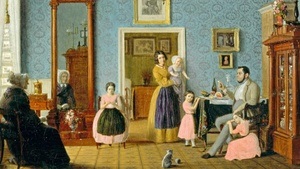
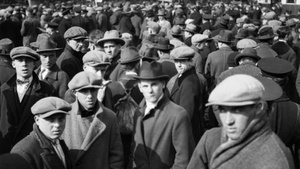
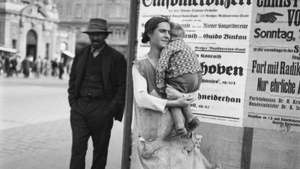
Edith Tudor-Hart, née Suschitzky, was a central protagonist of social documentary photography between 1930 and 1955. In her work, she was committed to highlighting social grievances, addressing issues such as poverty, integration and women's rights and depicting the living conditions of the working class. She photographed life in Viennese backyards, on the Danube and in the Prater, the protests against the rise of fascism, miners, factory workers and fishermen in Wales, the post-war women's movement and the new institutions of reform education.
Coming from a secular Jewish family in Vienna and as a convinced communist, her life was marked by political persecution and personal strokes of fate: She initially trained as a Montessori kindergarten teacher in Vienna and London, where she also practiced the profession. In the late 1920s, she studied photography and graphic design at the Bauhaus in Dessau, where she developed her objective, socially critical style. In 1933, she was imprisoned for her involvement in the Communist Party and fled into exile in England to escape fascism. She married her husband, the British doctor Alexander Tudor-Hart, at the British embassy in Vienna so that she could leave for Great Britain as his wife. In London, she successfully continued her photographic work and published numerous reportages in left-leaning newspapers and magazines, including the Arbeiter Illustrierte Zeitung (AIZ), the Kuckuck and the Picture Post.
It is assumed that Edith Tudor-Hart had been working with intelligence services and secret services in the Soviet Union since she was a teenager. However, her activities as an agent remained undiscovered throughout her life. There is historical evidence that she played a key role in the recruitment of the famous "Cambridge Five" spy ring. Fearing surveillance and exposure, she destroyed some of her negatives in the 1950s and ended her work as a photographer due to pressure from the British secret service and for health reasons. To earn a living, she opened a small antiquarian bookshop. Edith Tudor-Hart died in Brighton in 1973. It was only decades after her death that her photographic work was rediscovered and reassessed. Her photographic estate can now be found in the archive of the Fotohof Salzburg.
//
For the first time in Germany, f³ - freiraum für fotografie presents a comprehensive retrospective of the Austrian-British exile photographer Edith Tudor-Hart (*1908 Vienna - †1973 Brighton).
Edith Tudor-Hart, born Suschitzky, was a central figure in social documentary photography between 1930 and 1955. In her work, she actively highlighted social injustices, addressing topics such as poverty, integration, and women's rights, while documenting the living conditions of the working class. She photographed life in Vienna's courtyards, along the Danube and in the Prater, protests against rising fascism, miners, factory workers, and fishermen in Wales, the post-war women's movement, and the new institutions of progressive education.
Coming from a secular Jewish family in Vienna and a committed communist, her life was shaped by political persecution and personal hardships. She initially trained as a Montessori kindergarten teacher in Vienna and London, where she also practiced her profession. In the late 1920s, she studied photography and graphic design at the Bauhaus in Dessau, where she developed her objective, socially critical style. In 1933, she was imprisoned for her involvement with the Communist Party and fled fascism into exile in England. She married her husband, British physician Alexander Tudor-Hart, at the British Embassy in Vienna so that she could leave to Great Britain as his wife. In London, she continued her photographic work successfully, publishing numerous photo essays in left-leaning newspapers and magazines, including Arbeiter Illustrierte Zeitung (AIZ), Kuckuck and Picture Post.
It is believed that Edith Tudor-Hart had been working with Soviet intelligence and secret services since her teenage years. However, her activities as an agent remained undiscovered throughout her life. Historical records confirm that she played a key role in recruiting members of the famous "Cambridge Five" spy ring. Fearing surveillance and exposure, she destroyed a part of her negatives in the 1950s and, due to pressure from the British secret service and for health reasons, ended her career as a photographer. To support herself, she opened a small antiquarian bookstore. Edith Tudor-Hart died in Brighton in 1973. It was only decades after her death that her photographic work was rediscovered and reassessed. Her photographic estate is now housed in the Fotohof Salzburg archive.
This content has been machine translated.
Price information:
Children up to the age of 12 receive free admission. Reduced tickets are available on presentation of the relevant ID: school pupils, students, participants in the Federal Voluntary Service, voluntary social year, unemployed persons, recipients of the citizen's allowance, holders of the berlinpass, severely disabled persons (at least 50 % MdE) Journalists receive free admission after prior accreditation. Please register Monday to Friday, between 8 a.m. and 4 p.m., by e-mail to presse@fhochdrei.org.
Location





Events near you
Activities near you
Popular event locations
The best event recommendations for the Rausgegangen App!

Gemeinsam Events erleben
Events werden noch schöner wenn wir sie teilen! Deshalb kannst du dich jetzt mit Friends und anderen Usern vernetzen um Events gemeinsam zu besuchen. Loslegen