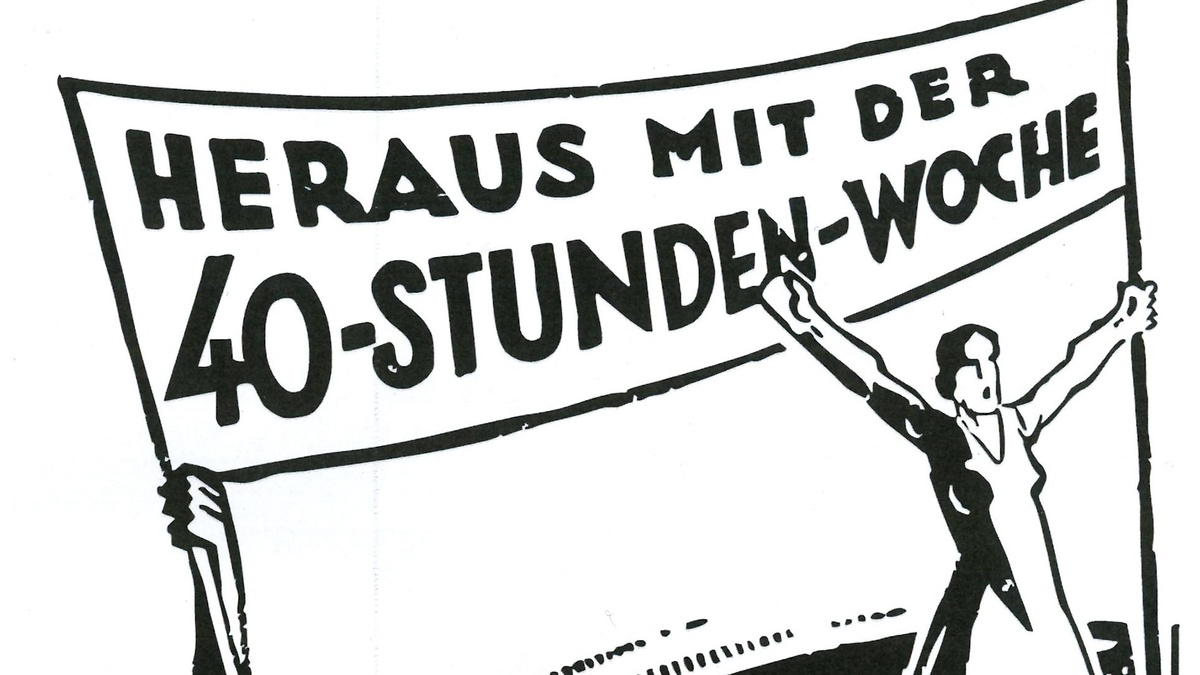
»GHT – Frühe Werke von Georg Hans Trapp, des Zeichners von Flossenbürg«. Eine Ausstellung der Seliger-Gemeinde

In the organizer's words:
Duration: March 23 - April 20, 2026
About the exhibition:
In fourteen selected examples, the Seliger-Gemeinde refers to the political prints of the Sudeten German artist Georg Hans TRAPP, which were created between 1931 and 1938.
Georg Hans (Johann) TRAPP was born on December 1, 1900 in Tischau (Mstišov) No 89, near Eichwald (Dubi) in the Teplitz district. His father was an ironworker, later a glassmaker. The family lived in modest circumstances. TRAPP first learned the trade of glass engraver. He continued his education by studying at the vocational school for ceramics and arts and crafts in Teplitz-Schönau. Almost penniless, he hitchhiked to Italy and lived from odd jobs. He studied at the Academy of Painting in Rome and then with Victor Slama in Vienna. TRAPP returned to Teplitz-Schönau and became an illustrator for the Sudeten German Social Democrats. He created illustrations for various newspapers, including the "Sozialdemokrat Prag", as well as for books, yearbooks and prints with a political slant.
In the Teplice youth organization of the Socialist Youth Association, he was the Trappschorsch and set the tone. He had other artistic talents, for example he could recite and play music. In the 1930s, he worked as a draughtsman for the Teplitz newspaper Freiheit and other social democratic publications. He created posters, graphics and, for example, a stage design for the Reich Youth Day in Bodenbach in 1936. This work and his political statements made him the target of National Socialist persecution.
After the Munich Agreement in 1938, TRAPP emigrated to Norway and his partner Hanna followed him. After the invasion of the Wehrmacht, both were sent to the internment camp in Grini, and from 1943 to various concentration camps in Germany, Trapp to Flossenbürg and finally to Dachau. His later wife Hanna (married in summer 1945) was sent to Ravensbrück concentration camp, among others.
In 1945, they briefly returned to the CSR together before moving to Gränna in Sweden, where TRAPP continued his artistic work. Here he created drawings that commemorated the suffering of the prisoners in the various concentration camps. A first exhibition by the Seliger community was entitled "Face of the Victims".
In Sweden, TRAPP lived as a recognized artist mainly in the field of painting and also left works in churches and public buildings.
He kept in touch with his friends from his youth and in the Seliger congregation both personally and by letter. In December 1968, TRAPP was awarded the 1st Wenzel-Jaksch Memorial Prize in Bonn-Beuel.
Georg Hans TRAPP died on September 17, 1977 in Gränna/Sweden.
More information: www.esgehtumalles.eu/ausstellung-georg-hans-trapp
Location
















Events near you
Activities near you
Popular event locations
The best event recommendations for the Rausgegangen App!

Gemeinsam Events erleben
Events werden noch schöner wenn wir sie teilen! Deshalb kannst du dich jetzt mit Friends und anderen Usern vernetzen um Events gemeinsam zu besuchen. Loslegen